You Have a Reputation Before You Have a Personal Brand
You do not need a logo, a content strategy or thousands of followers to have a personal brand.
In fact, you do not even have to believe in personal branding.
People are already collecting information about you. They notice what you talk about, what you repeatedly do, how you behave when something goes wrong, what you seem to care about, what you avoid, how you treat people and what other people say about you.
Eventually, those pieces begin to form a picture.
You might call that your personal brand. I’m much more interested in something underneath it: your public identity—the version of you that exists in other people’s minds based on the evidence they have encountered.

You Don’t Completely Control What People Think of You
Traditional personal branding advice often begins with questions such as: What do you want to be known for? What are your values? What is your message?
Those questions can be useful. But they begin with your intention.
Other people do not experience your intention directly. They experience your behaviour.
You may intend to be approachable while regularly appearing unavailable. You may think of yourself as decisive while other people repeatedly experience hesitation. You may believe you are known for one area of expertise while the thing people actually keep asking you about is something else entirely.
That does not automatically make their interpretation correct. It does make it information worth examining.
Reputation Is Built From Repetition
One isolated moment rarely tells us everything about a person. Patterns are more interesting.
If somebody encounters the same quality, subject, behaviour or response repeatedly, it becomes easier for them to associate it with you. This is how people become known for things they never deliberately decided to put in a brand strategy.
Sometimes that is useful. Sometimes it is frustrating. Sometimes other people notice a strength long before the person possessing it considers it remarkable.
And sometimes a reputation survives long after the person has changed.
This is why public identity is not simply a question of deciding what you want people to think and repeating it loudly enough. There is already evidence in circulation.
Your Online Presence Is Only Part of the Evidence
Social media made personal branding feel like an online activity, but people were forming reputations long before Instagram or LinkedIn existed.
Your digital presence matters because it gives strangers access to more evidence. A website, interview, social profile, podcast appearance, article or old biography can all contribute to the version of you somebody constructs before meeting you.
But the read continues offline.
How you enter a room, answer a difficult question, respond when challenged, speak about other people, handle uncertainty or behave when you have nothing to gain from the interaction can communicate far more than a perfectly written bio.
The internet did not invent public identity. It simply gave it more places to live.
Consistency Does Not Mean Performing the Same Version of Yourself Everywhere
One of the most persistent pieces of personal branding advice is that you must be “consistent.” That can easily become an instruction to flatten yourself.
Human beings are contextual. You will not behave exactly the same way with your closest friend, a board of directors, your child, a journalist and a room full of strangers. Nor should you.
The more interesting question is whether recognizable patterns survive across those different contexts.
Perhaps it is the way you explain complicated things. Your humour. The questions you ask. The details you notice. Your willingness to challenge an assumption. The subjects you continually return to. The way people feel after speaking with you.
Those recurring signals can tell us much more about identity than forcing every platform to sound identical.
Sometimes Other People Know What You’re Known for Before You Do
Ask several people what they come to you for and you may hear something you barely think about.
That is one of the strange things about identity: we become accustomed to our own qualities. Something that feels completely ordinary from inside us can be highly distinctive from the outside.
This is also why self-assessment has limits. You possess information nobody else has, but other people possess a vantage point you cannot occupy.
Both perspectives matter.
Before You Build a Personal Brand, Examine the One That Already Exists
If you are trying to become more visible, reposition yourself professionally or become known for something, resist the temptation to begin by inventing a new version of yourself.
Start with evidence.
What do people already associate with you? What keeps repeating? Where does your reputation match your self-perception? Where does it surprise you? What are people seeing that you have dismissed as ordinary? And where might an old version of you still be shaping expectations?
You may discover that the most distinctive parts of your public identity were never manufactured at all.
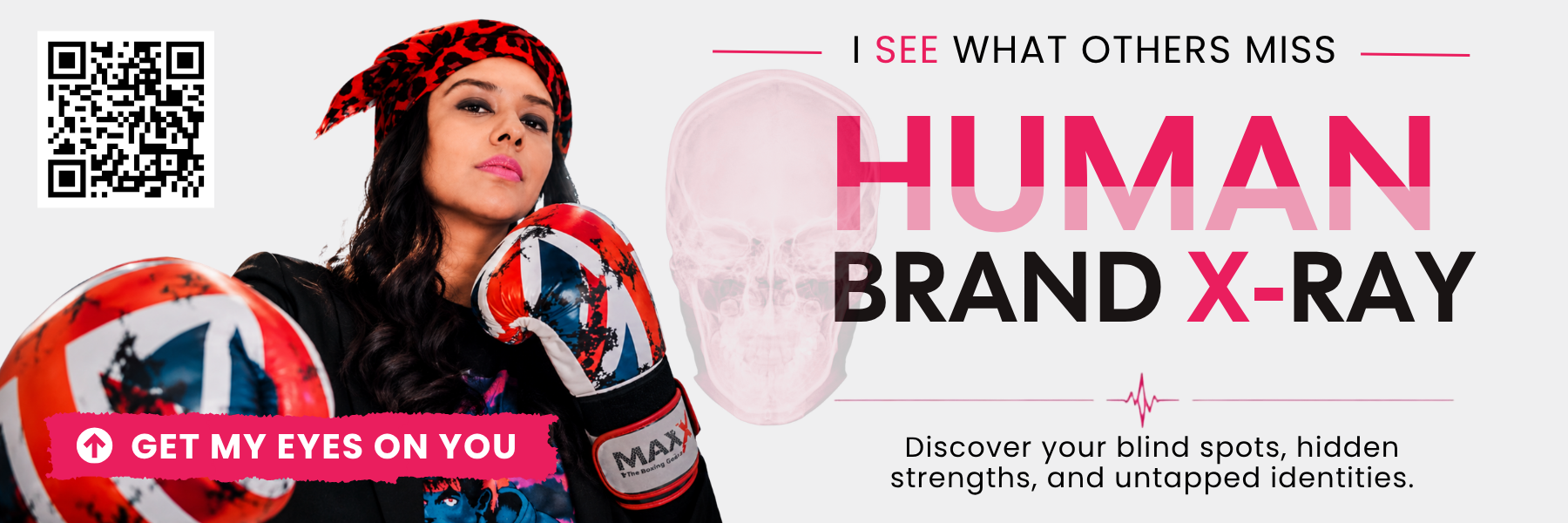
That is what I look for in a Human Brand X-Ray. I examine the signals already present, the patterns that repeat and the person who may be difficult to see when you are standing inside your own life.